


The generative AI boom has reached a fever pitch, and Washington is scrambling to figure out how to reign it in. Just weeks after the US government aggressively stepped in to block Anthropic from releasing two of its latest models, the conversation around federal oversight is taking an unprecedented turn.
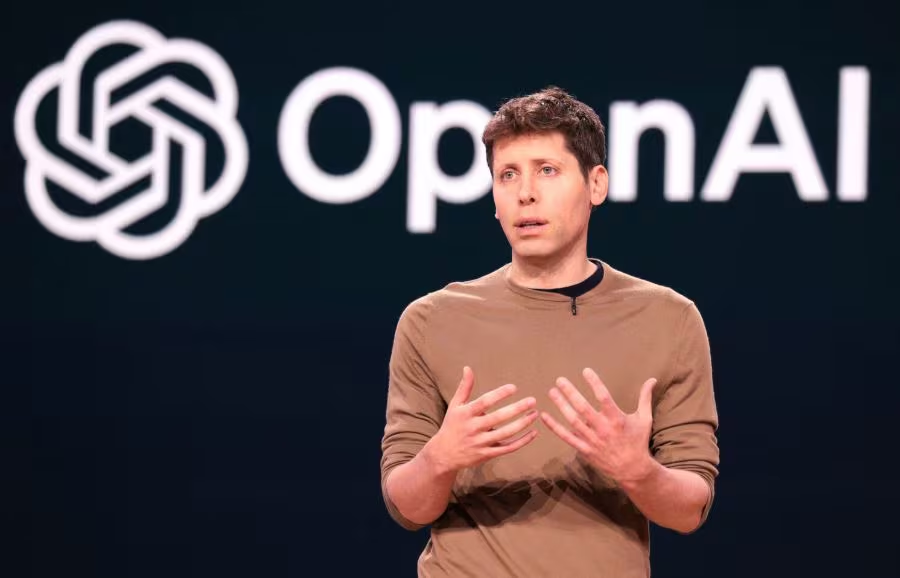
According to a new report from the Financial Times citing two sources, OpenAI CEO Sam Altman has floated a staggering proposal during recent talks with Donald Trump’s administration: handing the US government a 5% equity stake in the AI juggernaut.
The Rationale: Offsetting the AI Disruption
Altman appears to be reading the writing on the wall regarding the socioeconomic fallout of artificial intelligence. As AI models become increasingly sophisticated, the collateral damage to the labor market is becoming harder to ignore. Companies are already shedding jobs and terminating contracts as AI steps in to fill the void, resulting in tangible financial harm to everyday workers.
Altman’s proposal is framed as a direct response to this economic displacement. The core philosophy driving the pitch is that a portion of the astronomical revenues generated by AI rightfully belongs to the public, whose data and livelihoods are directly impacted by its rapid evolution.
A $42 Billion Windfall for Public Infrastructure
To be clear, this proposal does not mean OpenAI is planning to airdrop shares directly into the brokerage accounts of US citizens. Instead, the 5% equity stake would serve as a massive, novel revenue stream for the federal government.
Based on OpenAI’s current eye-watering valuation of $852 billion, a 5% slice of the pie equates to roughly $42 billion. The US government would have total discretion over these funds. Whether they choose to hold the equity or liquidate it, the capital is intended to be funneled into critical public sectors—such as healthcare, education, and other essential services that directly touch the lives of citizens.
Setting a Silicon Valley Precedent?
As of now, the proposal remains strictly on the table with the incoming Trump team, and no final decisions have been made. However, the mere existence of this conversation has massive implications for the broader tech ecosystem.
If the administration accepts Altman’s offer, it could fundamentally rewrite the playbook for how AI companies operate within the United States. Industry watchers are already speculating whether tech heavyweights like Google and Anthropic will be forced to follow suit, offering up their own equity to the government just to remain competitive and in Washington’s good graces.
What This Means for the Market and Developers
If formalized, giving the federal government a seat on OpenAI’s cap table would be a seismic shift for the tech market. For investors, it blends public and private interests in a way usually reserved for state-backed enterprises, not nimble Silicon Valley startups. For OpenAI, it could secure a powerful regulatory moat—after all, the government is far less likely to aggressively regulate or break up a company in which it holds a $42 billion vested interest.
For the broader developer ecosystem, however, this could cast a chilling effect. If legacy giants secure preferential regulatory treatment by essentially cutting the government in on their profits, open-source developers and bootstrapped startups might find themselves navigating an uneven playing field, struggling to compete against AI monopolies backed by federal equity.
OpenAI’s Radical Pitch: Sam Altman Proposes a 5% Equity Stake for the US Government
The generative AI boom has reached a fever pitch, and Washington is scrambling to figure…

US Lifts National Security Ban on Anthropic (Claude Fable 5 and Mythos 5) AI
After a tense, month-long regulatory freeze, the floodgates are back open. Anthropic is officially rolling…
ChatGPT Group Chats: Revolutionizing Collaborative AI
OpenAI is rolling out a significant new feature to its flagship AI chatbot, ChatGPT: ChatGPT…

Galaxy S26 Leaks: What to Expect
Galaxy S26 Launch Date, Specs, and Everything We Know So Far As 2025 draws to…
China’s New AI Contender: Kimi K2 Thinking Challenges Global Giants
The global artificial intelligence (AI) race has just intensified, with a new and potent challenger…

Google Maps Gets a Brain: Gemini AI Integration Transforms Navigation
Google is significantly upgrading its premier navigation service, Google Maps, by integrating its most powerful…